A flight diversion is when a plane lands at a different, alternate airport instead of its planned destination. It's rare and almost always happens for safety reasons, but it can make for some anxious moments as a passenger. This guide explains why diversions happen, what follows, and what rights you have.
🛬 What a diversion is
A diversion means the pilot changes the destination airport mid-flight and lands at the nearest suitable one. The crew makes the call in the interest of safety — it's always a precaution, not a sign of alarm.
After landing the plane often waits on the apron for hours until the situation clears — then either flies on to the final airport or the airline moves passengers by ground transport.
🤔 Why diversions happen
- Bad weather at the destination — fog, strong winds, snow or thunderstorms
- A medical emergency on board — a passenger needs urgent care
- A technical issue that calls for an early landing
- A temporary closure of the destination airport (an incident, security)
- Fuel limits — if holding in the air drags on, the pilot lands nearby to refuel
🧭 What happens after landing
Several scenarios can follow a diversion. If the cause is weather, the plane often waits for it to clear and then flies on to the final airport — arriving a few hours late overall. If the wait drags on, the airline moves passengers to the destination city by bus or train.
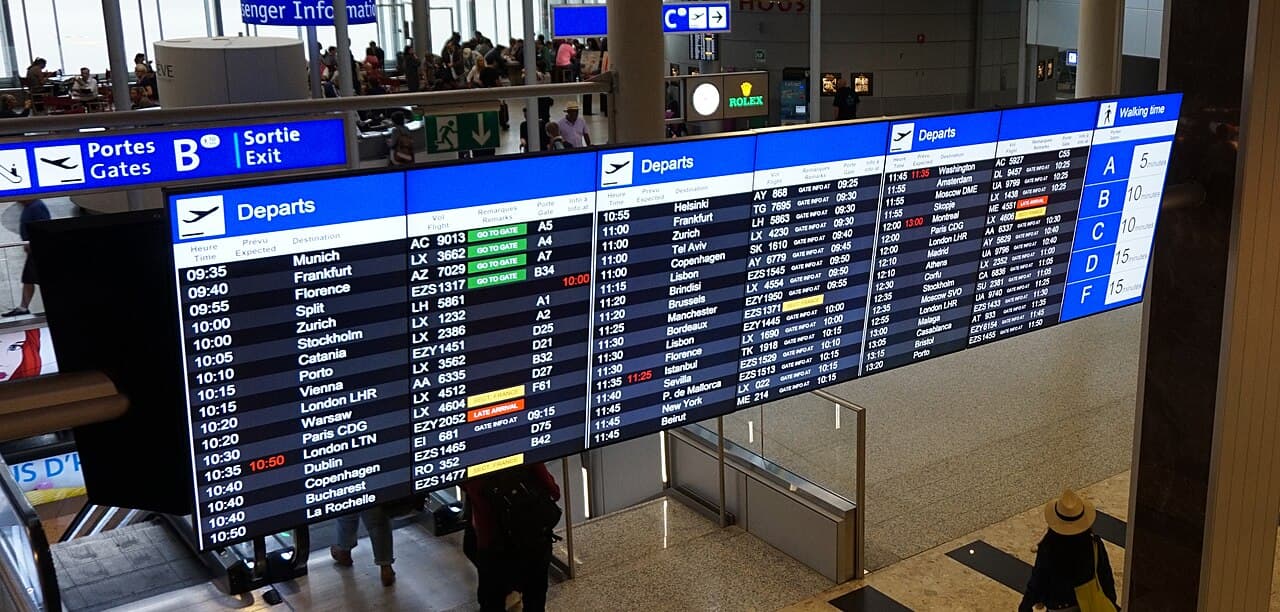
The key is to stay calm and informed: follow announcements from the crew and the airport screens, and don't leave the terminal without instructions from the airline. If you need internet, the airport Wi-Fi guide helps.
A diversion is not a cancellation. The flight usually continues — just by a different route or later. So keep your ticket and baggage receipt until you reach your final destination.
💶 Rights and compensation
On European flights, a long delay caused by a diversion falls under the EU261 regulation. While you wait the airline must provide care — meals, drinks and, if needed, a hotel. Cash compensation (€250-600) is owed only if the delay was within the airline's control; bad weather counts as an 'extraordinary circumstance' and rules compensation out.
For details see the flight delay compensation and flight cancellation guides. If a diversion made you miss a connecting flight, the missed flight guide is useful.
🧳 Baggage and connections
If the plane does fly on to your final airport after a diversion, your bag stays on board and arrives with you. If passengers are moved by ground transport, your baggage is sent along too — you'll just need patience.
Diversions hurt connections most: a tight connection can collapse if your first leg is diverted. So build in spare time when you plan — see the minimum connection time and baggage on connecting flights guides.
Don't rush to buy a new ticket at the alternate airport — wait for the airline's official decision first, or you may not get the money back.
💡 Tips
- Turn on flight SMS/app alerts — get the first word of a diversion fast
- Leave spare time on tight connections, especially in winter when weather shifts often
- Keep every receipt (meals, taxi, hotel) to claim back care costs
- Diversions are rare on night flights, but see the red-eye flights guide
- Plan your next flight with a buffer using the Travel365 price calendar
Tags