A first flight feels stressful for many people — unfamiliar terms, queues, security checks and the fear of being late. In reality the whole process breaks down into clear steps: check-in, dropping your bag, security, finding your gate and boarding. Once you know what follows what, the airport stops being intimidating — and this guide is built to prepare you for exactly that first flight.
🎫 After booking — documents and preparation
The moment you book, double-check that your first and last name match your passport exactly — even a single wrong letter can cause problems. Check your passport validity too: international flights often require it to be valid for at least 6 months from your arrival date.
If your destination needs a visa (for example, the Schengen area), arrange it before the flight. Download the airline's app in advance — it shows your gate, any delay and your boarding pass.
The day before you fly, run through the pre-flight checklist — it makes sure nothing is forgotten.
💻 Check-in — online or at the airport
Check-in is your registration for the flight. Most airlines open online check-in 24-48 hours before departure — it saves time and stress, and you get the boarding pass straight to your phone. With low-cost carriers (Wizz Air, Ryanair) online check-in is often mandatory, and printing at the airport is a paid extra.
If you have no bag to check in, after online check-in you head straight to security.
For details see the online check-in guide — how to register from your phone.
🛄 Arriving at the airport and checking your bag
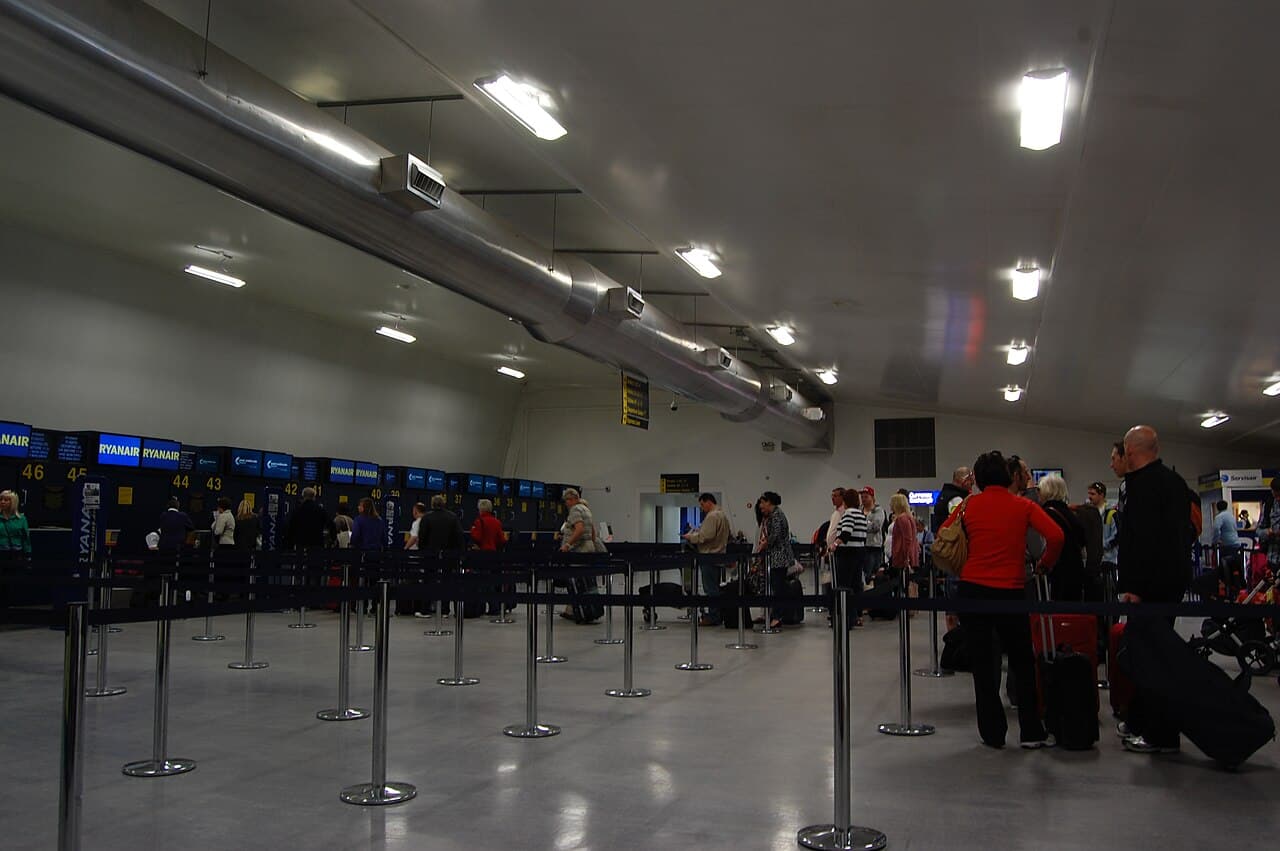
For international flights arrive 2-3 hours early; for domestic flights, 1.5 hours. On the Departures board find your flight and its check-in desk number.
If you have a bag to check in, hand it over at the check-in desk — they weigh it, tag it and give you a baggage receipt. Your hand luggage stays with you.
- Keep your passport and boarding pass in hand — you'll need them often
- Check your checked-bag weight in advance — excess kilos are expensive at the airport
- Liquids in hand luggage only in containers up to 100 ml, in one transparent bag
- Keep valuables (phone, documents, medication) in your hand luggage, not the checked bag
🛂 Security and passport control
At security, place your hand luggage, outer layer, belt and electronics in a separate tray; take your liquids bag out separately. This is a routine procedure — don't rush and follow the officer's instructions.
On an international flight, passport control comes next — here they check your passport and, where required, your visa.
If it's your first time through security, give it time — a long queue can take 30-40 minutes. That's exactly why you arrive early. See airport security tips.
🚪 Gate, boarding and getting on board
After control you reach the departures zone. Find your gate number on the board and head there — at large airports the gate can be a 15-20 minute walk. Boarding usually begins 30-40 minutes before departure.
At boarding they check your boarding pass and passport, then you board the aircraft — your seat number is printed on the boarding pass.
- The gate can change — glance at the board periodically
- Boarding closes on time — especially strictly on low-cost flights
- In the seat number, the letter is the row position (A and F — window; C and D — aisle)
- If you're nervous about flying, read overcoming the fear of flying beforehand
Conclusion
A first flight is only ever first once — once you've been through the process, the next flight is already a familiar routine. What matters is arriving early, accurate documents and staying calm. For your next step see Carry-on luggage rules 2026 and the boarding process in detail. Find your ticket in the flight search and compare prices on the price calendar.
Tags