If you're flying to Europe in winter — Vienna, Warsaw, Frankfurt or Munich — you may notice the aircraft sits on the taxiway for another 15-40 minutes after leaving the gate before it finally takes off. The reason is almost always de-icing: the mandatory safety procedure that clears ice and snow from the wings, and no airline skips it.
🧊 Why ice forms on the wings
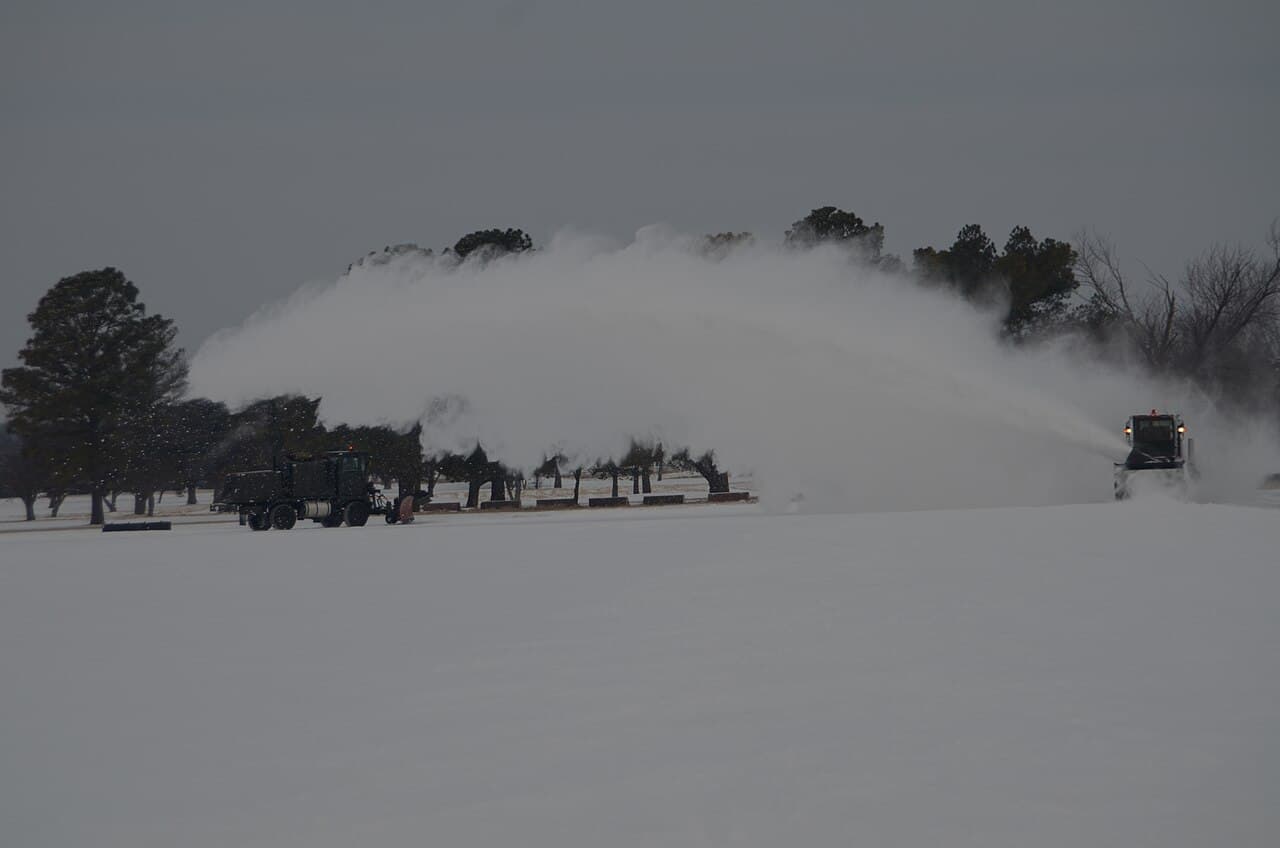
A wing's surface is engineered for airflow to move over it in a precise way, generating the lift needed to take off. Even a thin layer of ice or snow disrupts that airflow and can cut lift dramatically — which is why any visible ice has to be removed before departure, not just heavy buildup but a thin frosty coating too.
🚛 How the de-icing process works
- A specialized truck sprays the aircraft with a glycol-based fluid, usually in two steps — the first removes existing ice, the second leaves a protective layer that delays new ice or snow from forming
- That protection window, called holdover time, depends on air temperature and how heavy the precipitation is — often somewhere between 20 and 45 minutes
- If that window runs out before takeoff, the whole procedure has to be repeated — which is exactly what stacks up delays during heavy snow
- De-icing usually happens at the gate or on a dedicated pad — some hubs (Frankfurt, Munich) do it right on the taxiway on the way to the runway, which saves time
⏱️ How long it takes, and why your flight is late
The spraying itself only takes 5-15 minutes, but the real delay usually comes from the queue — dozens of aircraft can be waiting for the same service at once, especially in the morning after heavy overnight snow. Major European hubs (Munich, Vienna, Warsaw, Frankfurt) run this well, but it still typically adds 30-60 minutes in December-February.
A de-icing delay is a safety measure, not an airline mistake — under EU261, it's usually classified as an 'extraordinary circumstance,' so it typically doesn't qualify for delay compensation.
🧳 How to plan a winter flight
- Build in at least 2 extra hours on a connecting itinerary — the minimum connection time guide helps you plan it right
- Install a flight tracking app beforehand so you can see in real time whether your flight is delayed
- Pack warm clothes in your carry-on even if your final destination is warm — your connecting airport could be down to -10°C (14°F)
- December through February carries the highest delay risk in Europe — if your schedule is tight (a work meeting, say), book an earlier flight the same day as a buffer
💶 What compensation actually covers
If the delay runs past 3 hours and the cause is technical or an airline scheduling issue rather than weather, EU261 may entitle you to compensation — see the full breakdown in flight delay compensation.
Compare winter fares on Travel365's price calendar, and check travel insurance for delay coverage before you fly.
Tags