Skopje, the capital of North Macedonia, is one of the Balkans' less-visited but genuinely rewarding destinations — an Ottoman-era Old Bazaar, Austro-Hungarian architecture and monumental modern statues all sit side by side in one city. Here's how to get there from Tbilisi and what's worth seeing.
✈️ Flights from Tbilisi to Skopje
There's no direct Tbilisi-Skopje flight at the moment — the most convenient route is via one of the region's hubs.
- Via Istanbul — Turkish Airlines, the most frequent option
- Via Belgrade — a short Air Serbia hop deeper into the Balkans, see the connecting via Belgrade savings guide
- Via Vienna — an Austrian Airlines or Wizz Air combination
- Total flight time with a connection: 6-9 hours
🛂 Visa and entry rules
Georgian citizens don't need a visa for short tourist trips to North Macedonia — visa-free stays are allowed for up to 90 days within any 180-day period. A valid passport with enough remaining validity is all you need — see the passport validity rules.
North Macedonia isn't in the Schengen zone, so days spent there don't count toward the Schengen 90/180-day limit — a useful way to take a break between Schengen trips.
🏛️ Top attractions
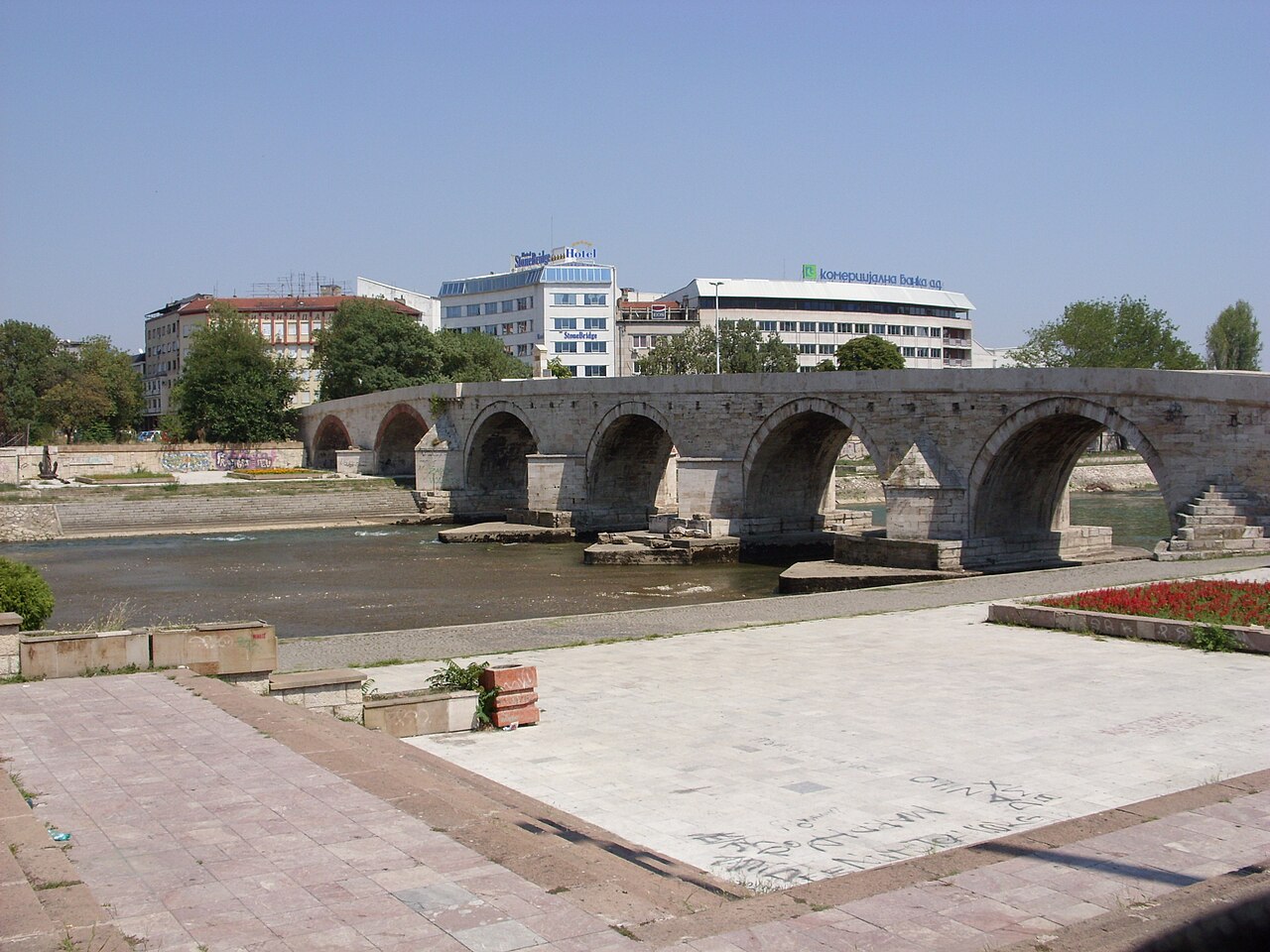
- Stone Bridge (Kamen Most) — an Ottoman-era bridge over the Vardar river, the city's symbol
- Macedonia Square — a giant equestrian statue and fountains at the heart of the city
- Old Bazaar (Stara Čaršija) — one of the Balkans' largest historic markets, with shops and mosques
- Skopje Fortress (Kale) — panoramic views over the city and the Vardar river
- Mother Teresa Memorial House — built on the site of her birth
- Matka Canyon — a natural canyon with a lake and caves, 30 minutes from the center
💰 Budget
- Hotel: 3★ $48-82/night || 4★ $92-150/night
- Food: local café $7-13; restaurant $17-32
- Transport: a city ticket $1, taxis in the center are cheap
- Cash: Macedonian denar (MKD) — see the currency exchange guide
- Many sights (the square, the bridge, the bazaar) are free — museums charge separately
💡 Practical tips
The best season runs April-June and September-October — summers get hot, winters are cold and foggy.
- Get an eSIM on arrival — it makes navigating much easier
- Travel insurance is essential, especially for a first visit to the region
Tags