Europe's cable cars and funiculars are one of the prettiest and easiest ways to conquer height in cities and mountains. They often carry you up to fortresses, panoramic hills or alpine peaks with no climb on foot — and the ride itself is already an attraction. This guide tells you which are worth it, what the difference between them is, and how to save on the ticket.
🚡 Cable car or funicular — what's the difference
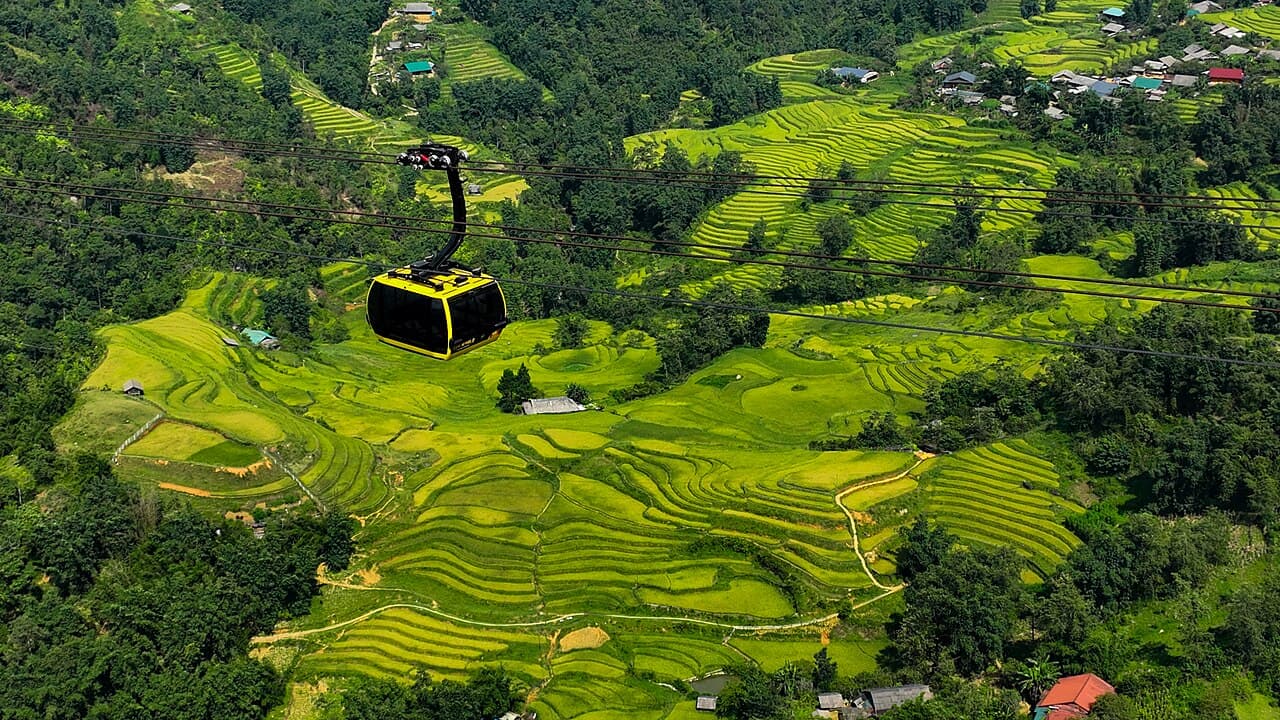
Both were invented to climb slopes, but they work differently. A funicular is a car that runs on rails — two cabins balance each other on a cable, one going up as the other comes down. A cable car is a cabin suspended in the air on a cable, flying over valleys and cliffs.
Funiculars are usually in cities, on steep hills; cable cars are on mountains and rivers. Both are often part of a city's public transport — see the Europe public transport guide.
🏰 Famous funiculars in cities
- Budapest — the Buda Castle Funicular (Budavári Sikló) with Danube views
- Lisbon — Glória and Bica, the city's iconic yellow cars
- Salzburg — the Festungsbahn up to Hohensalzburg Fortress; see Tbilisi → Salzburg
- Bergamo — the funicular up to the upper town (Città Alta); see Tbilisi → Bergamo
- Zagreb — one of the world's shortest funiculars (66 m)
- Prague — the Petřín hill funicular up to the lookout tower
- Istanbul — the Tünel, running since 1875, one of the world's oldest underground funiculars
🏔️ Cable cars worth seeing
- Barcelona — the Montjuïc cable car with views over the hill and port; see Tbilisi → Barcelona
- Dubrovnik — the cable car up Mount Srđ, with a panorama of the old town and the Adriatic; see Tbilisi → Dubrovnik
- Koblenz (Germany) — the Rhine cable car up to Ehrenbreitstein Fortress
- Grenoble (France) — the 'bubble' cable car up to the Bastille
- Innsbruck (Austria) — the Nordkette, straight from the city to an alpine peak
- Chamonix (France) — the Aiguille du Midi, one of Europe's highest cable cars, with a Mont Blanc view
🎟️ Ticket, price and city card
Prices vary widely: a city funicular often costs the same as a regular transport ticket ($1-3), while a big mountain cable car can run $15-40 (e.g. Chamonix, Innsbruck).
In many cities the funicular is included in the city tourist card or comes with a discount — if you're planning several attractions, the card often pays for itself. Buy the ticket in advance online at peak season to skip the queue.
✅ Plan a scenic route
For view lovers, cable cars and funiculars can become the highlight of a trip — and they pair beautifully with Europe's most scenic train routes. When planning, factor in the season: many mountain cable cars close for technical maintenance in winter.
On many cable cars the view is better on one side — going up, stand on the side where the city or valley opens out, and the opposite on the way down. On a cloudy day a mountain cable car loses its point — check the weather in advance.
Tags