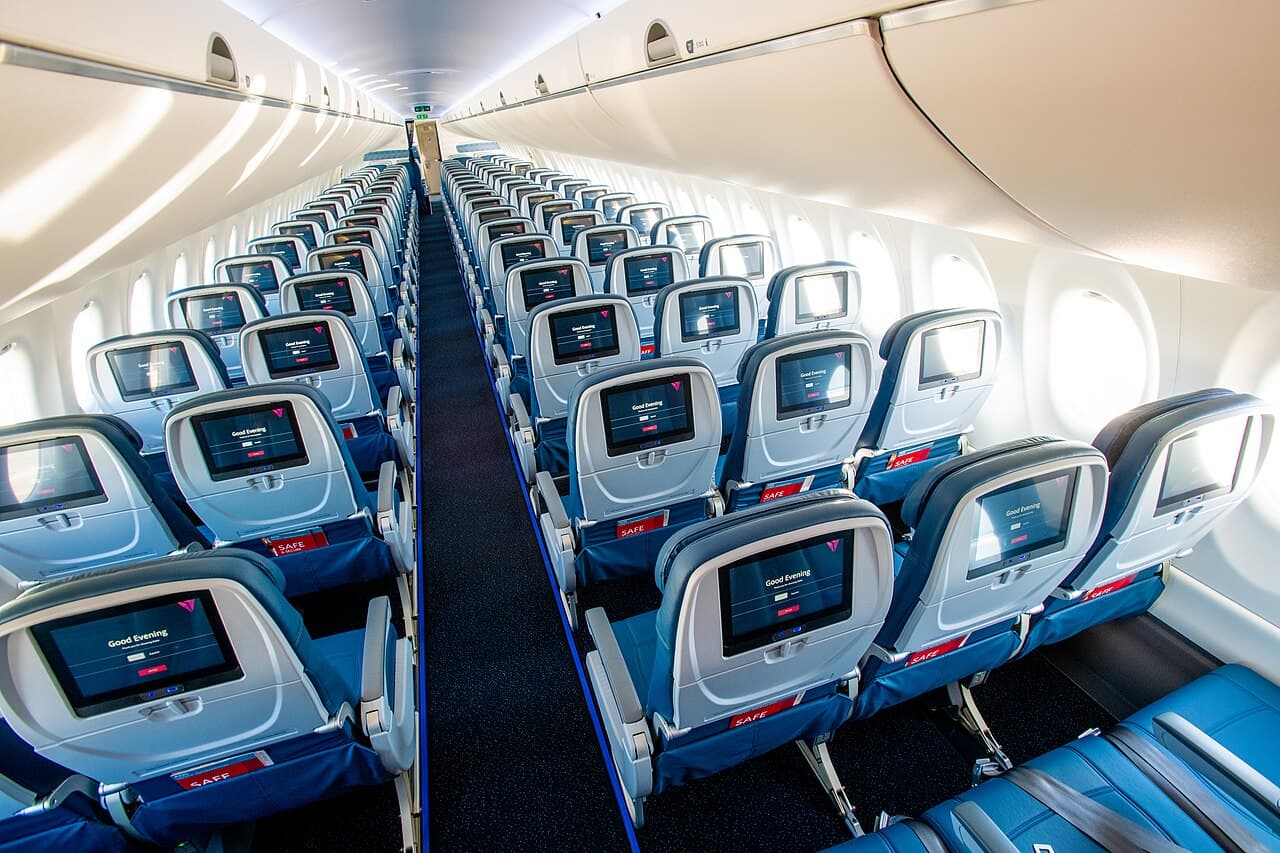
A bulkhead seat is the first row behind a cabin divider wall (the bulkhead), with no seat in front of it. That's why people associate it with extra legroom. But the bulkhead comes with its own rules and limitations you should know before you book. This guide explains what a bulkhead seat is, its pros and cons, and who should actually choose one.
🧱 What a bulkhead seat is
The bulkhead is the internal wall or partition that divides a cabin — for example, between business and economy, or in front of a galley or lavatory. The bulkhead seat sits right behind that wall, at the head of the row.
Because there's no seat in front, nobody can recline into your space and the legroom feels more open. That doesn't mean the bulkhead always beats an exit row, though — we'll break down the difference below.
✅ The advantages of a bulkhead seat
- No one reclines in front of you — your personal space stays more stable
- Often a bit more legroom than a standard row
- You're at the head of the cabin — among the first to deplane
- A baby bassinet usually attaches at the bulkhead — handy when flying with kids
- Easy to get up on the aisle side — no climbing over a neighbor
⚠️ The drawbacks and limits
- Your carry-on must go in the overhead bin during takeoff and landing — there's no seat in front to stow a bag under
- The armrest is often fixed (tray table and screen are stowed inside it) — the seat is slightly narrower
- On some aircraft the bulkhead is next to a lavatory or galley — noise and movement may bother you
- Airlines often sell bulkhead seats for an extra fee, like exit rows
Not every bulkhead is the same — on some aircraft it's genuinely roomy, on others almost standard. Before booking, check the specific aircraft's map on a site like SeatGuru.
🆚 Bulkhead or exit row — which to choose
Both the bulkhead and the exit row promise more legroom, but they're different. The exit row usually gives even more space, though the seat often doesn't fully recline and you're obliged to help open the door in an emergency.
The bulkhead is quieter and more convenient for families, but has the bag-storage limitation. If you just want more legroom and don't mind the emergency responsibility — the exit row often wins; if you need a bassinet or quiet — go bulkhead.
🎯 How to pick a bulkhead seat when booking
- When booking or during online check-in, look on the seat map for the first row after the wall
- Check the specific aircraft's map on a site like SeatGuru — they flag which bulkheads are good and which are bad
- Factor in the extra fee — it's part of the airline's ancillary charges
- For an overall seating strategy, see seat selection strategy and window vs aisle
🧳 Save on the ticket with Travel365
A well-chosen seat makes a long flight far more comfortable — the bulkhead is one way to get it. Before booking, compare prices on Travel365's price calendar and pick the cheapest day — you'll want the budget headroom to add a seat fee, after all.
Got a long red-eye? Pick a bulkhead or exit row for quiet and read our long-flight survival tips.
Tags