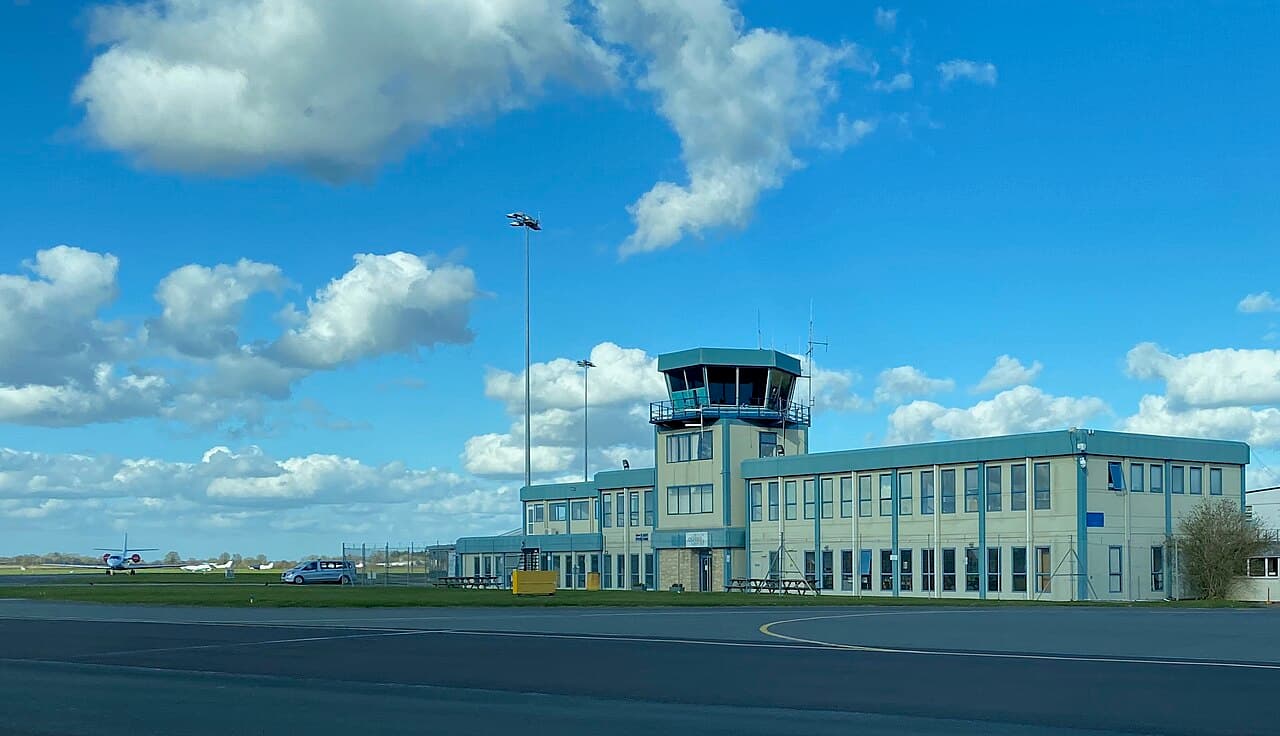
The airport control tower is that tall building beside the runway from which controllers (air traffic controllers) manage every aircraft's movement in the air and on the ground. It's on their instruction that a plane moves from the gate to the runway and climbs into the sky so that no two aircraft ever come dangerously close. This guide explains simply how the control tower works and what it means for you as a passenger.
🗼 What the control tower is
The control tower is the airport's highest vantage point, from which a controller can see the whole airfield. Its main job is to keep a safe distance between aircraft and to sequence traffic so that takeoffs and landings run without holdups.
- Controllers see aircraft both by eye and on radar and data screens
- Every instruction is passed by radio, in standard English aviation phraseology
- At big hubs several controllers manage traffic at the same time
- The tower works 24 hours — including at night, when only the navigation lights mark the runway
📡 The stages of air traffic control
A single flight is handled by different controllers on different segments — this chain ensures the aircraft is always under someone's control from departure to landing.
- Ground — manages taxi, the aircraft's movement from the gate to the runway
- Tower — issues clearance for takeoff and landing
- Approach — manages the climb and descent in the airport's vicinity
- Area / En-route — manages the aircraft at cruising altitude, between countries
👨✈️ Controller–pilot communication
The pilot and controller are in constant contact. The controller gives an instruction — which runway to take off from, say, or what altitude to climb to — and the pilot reads it back so a mistake is ruled out. This strict discipline is the foundation of aviation safety.
You'll find the technical side of takeoff and landing in the takeoff and landing guide, and what happens around the aircraft on the ground in the ground handling article.
⏱️ Why a plane waits to take off
If your aircraft is sitting at the runway threshold and not moving, it often means the controller is holding it in a queue — another plane is ahead, or the airspace corridor is busy. Bad weather, a congested airfield or route restrictions add extra minutes.
"We're waiting for our takeoff slot" means the aircraft has been assigned a specific time window by air traffic control. It's a normal procedure; if the final delay exceeds 3 hours, read up on flight delay compensation.
🧳 What it means for you
Understanding how the control tower works helps a passenger worry less when the aircraft sits on the ground for a while or circles in the air. It's almost always safe sequencing of traffic, not a technical problem.
- Boarding finishing doesn't mean immediate takeoff — see boarding time vs departure time
- Light bumps in the air are usually about weather, not a tower instruction — see turbulence explained
- On a tight connection, mind the minimum connection time, since airspace congestion can make you late
- To find a cheap ticket and compare prices, see the Travel365 flight search
If flying interests you, many big airports stream controller radio online — a fascinating way to hear how every takeoff comes together.
Tags