Europe time zones are one of those details travelers often forget — and then get confused about a flight's arrival time, a hotel booking or a call home. Georgia sits in a single time zone (GMT+4) and does not switch to summer time, while Europe is split into three main zones and changes the clock twice a year. This guide explains, simply, how big the difference is and how to keep your planning straight.
🕐 Georgia vs Europe — how big is the difference
- Central Europe (CET): Paris, Berlin, Rome, Prague, Madrid, Vienna — 2-3 hours behind Georgia
- Western Europe (WET): the UK, Ireland, Portugal — 3-4 hours behind
- Eastern Europe (EET): Athens, Bucharest, Sofia, the Baltics, Finland — 1-2 hours behind
- The exact gap depends on the season — in summer it shrinks by one hour (see below)
☀️ Daylight saving time (DST) — why the gap changes
Most European countries change the clock twice a year: on the last Sunday of March the clock goes forward one hour (summer time), and on the last Sunday of October it goes back. Georgia does not change its clock, so in summer the gap with Europe shrinks by one hour, and in winter it grows again. That's why a '3-hour difference' in winter becomes a '2-hour difference' in summer.
If your date falls near the clock-change weekend in late March or late October, double-check your flight's local time — a ticket always shows local time, not Georgian time.
📞 Where it matters: flights, calls, bookings
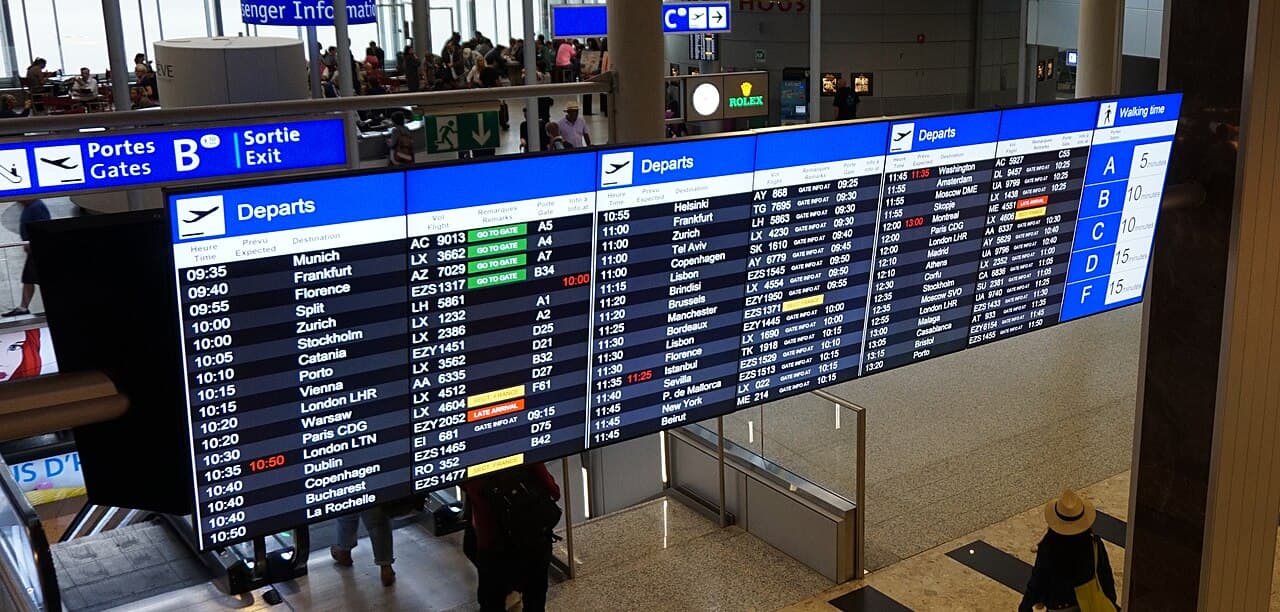
- Flight times: both departure and arrival on a ticket are in local time — so 'flight duration' can't be worked out from the ticket's clock times
- Online check-in: it usually opens 24-48 hours before departure in the departure city's time; see the online check-in guide
- Calls home: before you dial, work out Georgian time — 9:00 in Berlin is already 11:00 in Georgia
- Hotel check-in/check-out and bookings are always in local time
🧠 How to adjust to the difference
A 1-2 hour gap barely affects your body, but if you fly onward from Europe to a far destination, the difference is more noticeable. Simple rules help: reset your watch to local time the moment you land and live by the new schedule. For more, see the jet lag management guide.
Your phone sets local time automatically if you have internet — so get an eSIM in advance and switch it on the moment you land, so your clock and maps are right away.
Plan your flight to land in Europe during the day — night flights save more, and a daytime arrival eases the time difference. Find cheap dates on Travel365's price calendar.
Tags