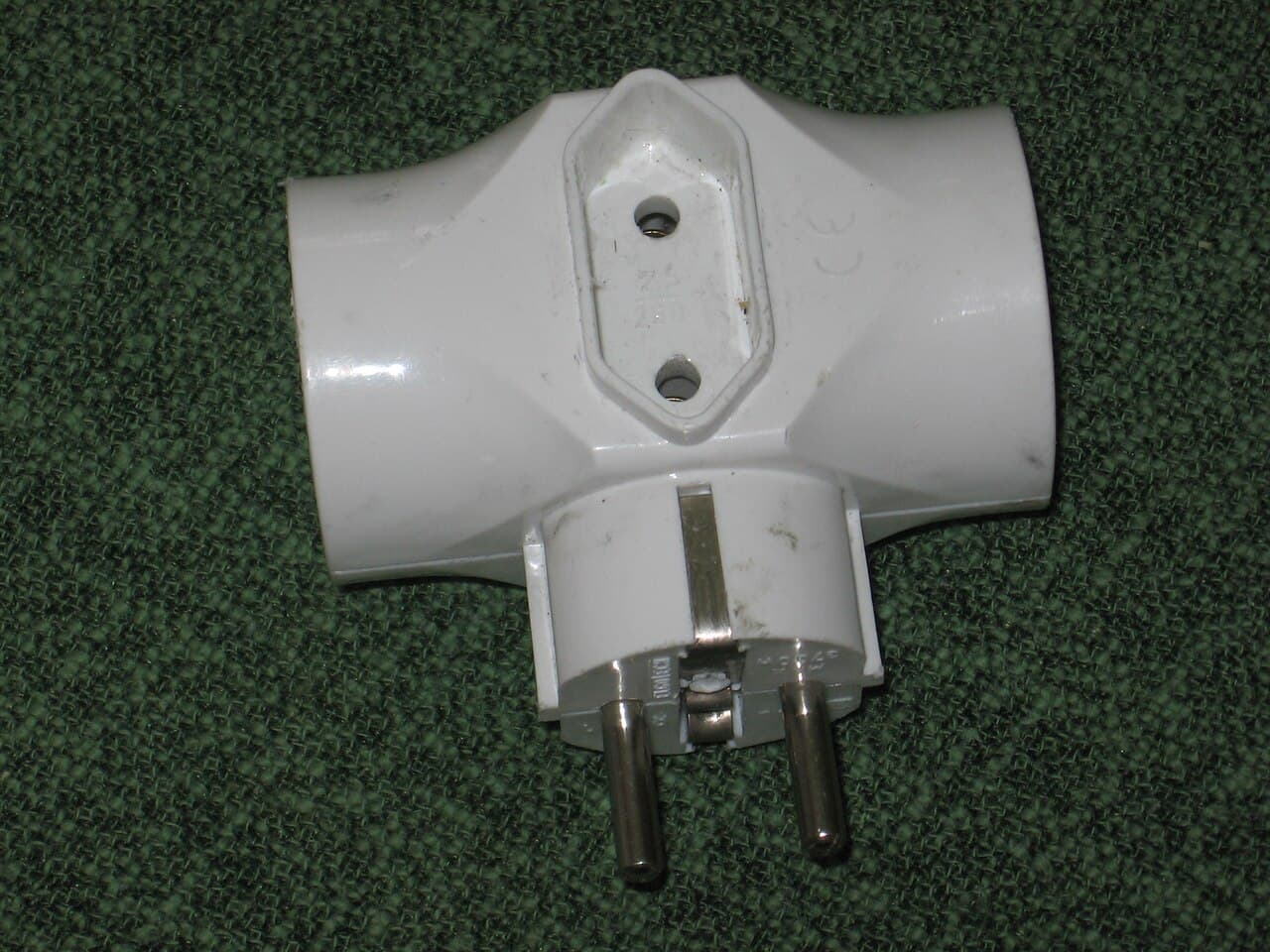
Phone charger packed — but will it even fit the socket? Georgia uses standard European Type C/F sockets, 220 volts, 50 Hz, and traveling abroad raises two separate questions: is the plug shape different, and is the voltage different. These are two different problems, and one adapter doesn't solve both.
🇬🇪 Georgia's standard
Georgia uses European-style sockets — Type C (the two-pin Europlug) and Type F (Schuko) — at 220V and 50Hz. This matches continental Europe, Turkey and most of Asia.
🔌 Where a plug adapter alone is enough (voltage already matches)
- UK, Ireland, Malta, Cyprus — Type G, 230V — only a plug-shape adapter is needed
- UAE and most Gulf countries — usually Type G or C, 220-240V — an adapter is enough
- Turkey — Type C/F, 220V — identical to Georgia, no adapter needed at all
- Most of continental Europe — Type C/E/F, 220-230V — usually a direct match with Georgia
⚡ Where you'll also need a voltage converter
The US, Canada and most of Latin America — Type A/B, 120V. Most phone and laptop chargers are dual-voltage (look for "INPUT 100-240V~50/60Hz" on the label) — for those, a plug adapter alone is enough. But a hair dryer, straightener or kettle is often single-voltage — a device built for 120V can be damaged even by a brief connection to a 220V socket.
A plug adapter only changes the shape of the plug — it doesn't convert voltage. High-power appliances (hair dryers, straighteners) need a dedicated voltage converter or a dual-voltage travel version.
💡 Practical tips
- A "100-240V" label on a charger or device means it's universal and a plug adapter is all you need
- A universal adapter with built-in USB ports makes it easy to charge several devices at once
- Buy the adapter at home before you travel — airport shops (TBS, KUT, BUS) have limited selection and much higher prices
More on packing efficiently in the suitcase packing guide. For staying connected abroad, see the full eSIM guide and international roaming. Compare fares on Travel365's price calendar.
Tags