Plovdiv is a Bulgarian city full of ancient sites and one of the oldest continuously inhabited cities in Europe. It keeps a Roman theatre, the colorful houses of its Old Town and the modern Kapana district. In 2019 Plovdiv was a European Capital of Culture.
✈️ Flying from Tbilisi
- Plovdiv's own airport has few regular flights, so it is practical to fly into Sofia (SOF)
- You can reach Sofia from Tbilisi on a direct or connecting flight; sometimes a connection via Istanbul is more convenient
- Sofia to Plovdiv is about 150 km: bus about 2 hours, train about 2.5 hours, tickets roughly $7-13
- For exact prices, compare flights on Travel365's price calendar
🏟️ The Roman theatre and Old Town
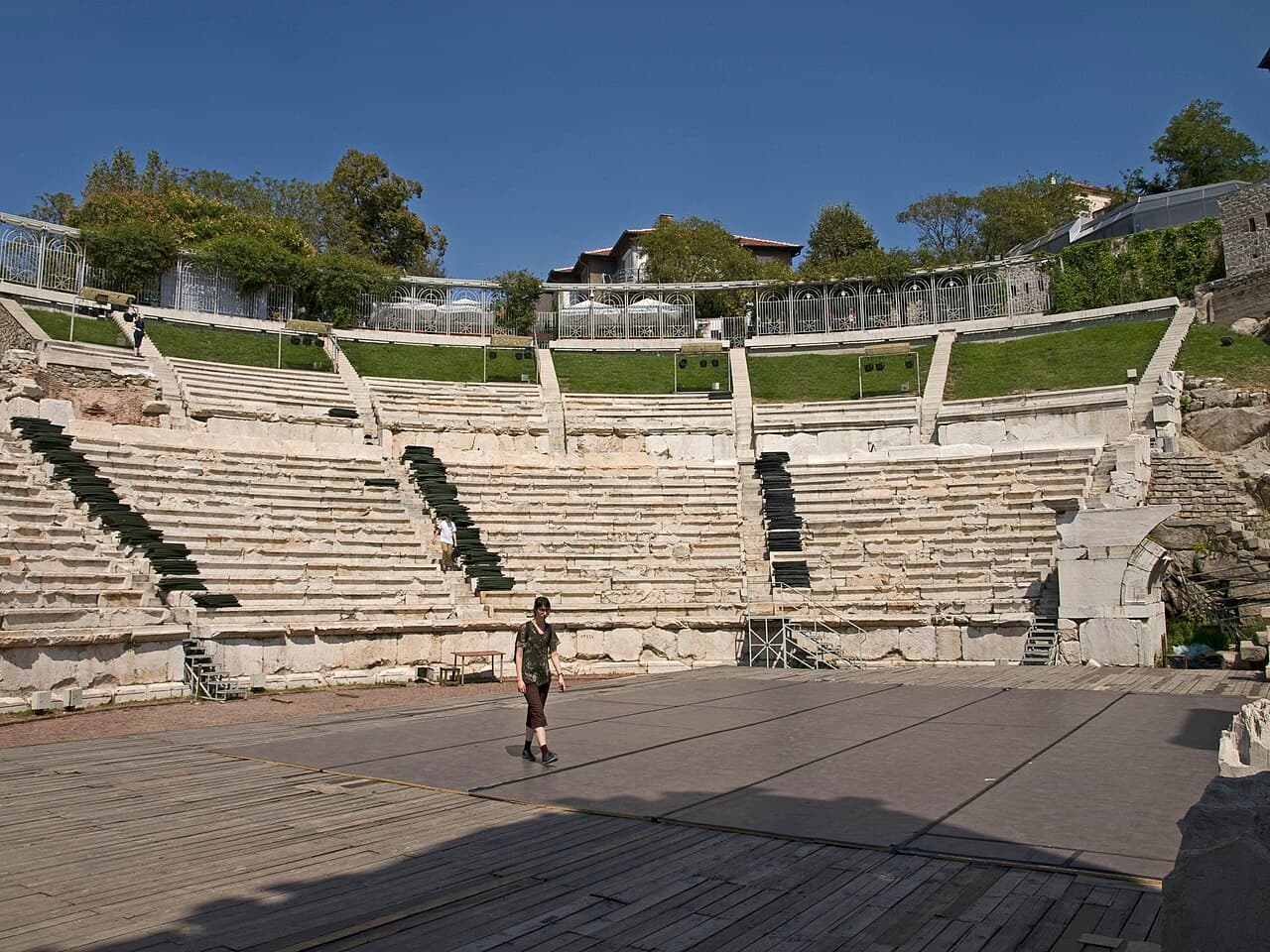
Plovdiv's Roman theatre dates to the 2nd century AD and is still used for performances. The Old Town begins nearby: colorful Bulgarian Revival houses, narrow streets and galleries. Walk the Old Town in the morning, when crowds are smaller.
🎨 Kapana and modern Plovdiv
Kapana is Plovdiv's trendiest district, with craftspeople, cafés, bars and street art. About an hour is enough to walk through, but it is worth stopping for lunch. Bulgarian food is relatively cheap and does not need a big budget.
⛰️ Hills and views
- Nebet Tepe — ancient fortress ruins beside the Old Town
- Dzhendem Tepe (Youth Hill) and other hills — views across the whole city
- Old Town museums — ethnographic and house museums
Old Town cobblestones are slippery when wet, so wear shoes with good soles.
💶 Budget and itinerary
Bulgaria is one of Europe's most affordable countries. A mid-range hotel costs roughly $35-70 a night and a traditional lunch $5-10. Two to three days are enough for the city; you can add a night in Sofia. To extend a Balkan route, see Tbilisi → Ohrid: A Guide to Macedonia's Lake and Churches and Tbilisi → Belgrade: The Complete Guide to Serbia's Capital.
Plovdiv fits well into a Balkan itinerary. Search for tickets early with Travel365's flight search.
Tags