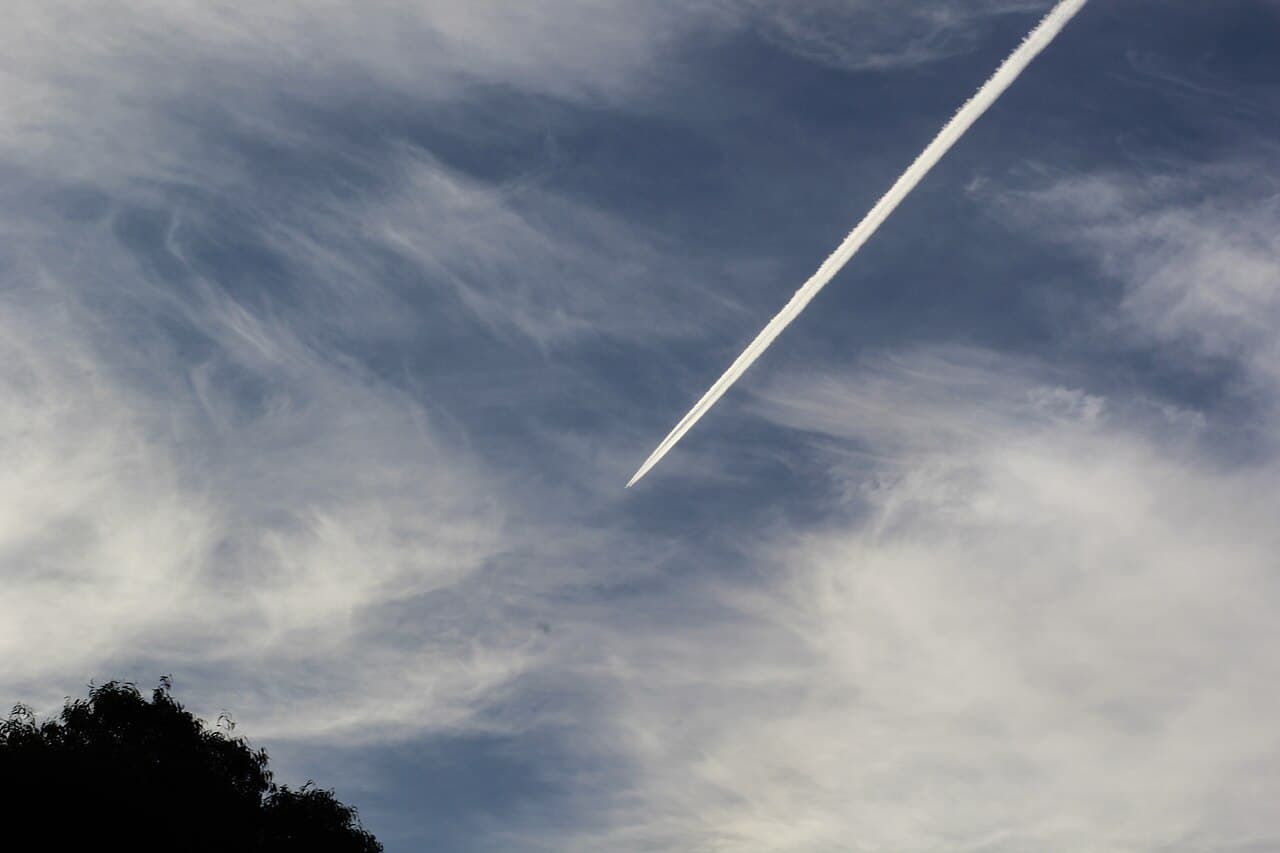
A contrail (short for condensation trail) is the white line stretching behind an aircraft high in the sky. It isn't smoke — it is a streak of tiny ice crystals formed from the water vapour in the engine exhaust. Here is a simple explanation of why contrails appear and why some of them stay in the sky for hours.
❄️ How a contrail forms
Passenger jets usually cruise at 9-12 km, where the outside temperature drops to −40°C or lower. Burning fuel releases hot exhaust together with water vapour. That vapour meets extremely cold air, condenses almost instantly and freezes — forming a trail of ice crystals.
⏳ Why some fade fast and others linger
How long a contrail lasts depends on how humid the air is at that altitude.
- Dry air — the trail vanishes within seconds or minutes as the ice crystals evaporate
- Humid air — the contrail persists, spreads out and can start to look like natural wispy cirrus clouds
- Wind and altitude — these decide whether the trail turns into a wide band of cloud
- Weather hint — long, lasting contrails sometimes point to plenty of moisture at high altitude
On the same day one plane can leave a long trail while another leaves almost nothing. Altitude, humidity and engine type make the difference.
🚫 The 'chemtrails' myth
A popular online claim says white trails are chemicals deliberately sprayed into the sky. According to scientific evidence, a contrail is ordinary water vapour condensing, and its formation is easily explained by physics. How long a trail lasts depends on the state of the atmosphere, not on any additive on board.
🌍 Contrails and the climate
Persistent contrails and the cirrus clouds they create trap heat in the atmosphere, so they add to aviation's climate impact. Some airlines and research groups are testing small altitude changes in especially humid air to reduce contrail formation. For now this remains an experimental area.
📸 How to spot and photograph them
- Contrails look best in clear skies at sunrise or sunset, when low sunlight tints the trail
- Sit behind the wing and reduce window glare if you want to watch from on board
- A clean window and dark clothing improve photos — see Airplane Window Photography: How to Shoot from the Sky
- For more on flight phases, read Takeoff and Landing Explained: What Happens and Why
Curious about wing details? Read Airplane Wing Flaps Explained: Why the Wing Changes Shape to see how the wing changes shape at takeoff.
Plan your next flight with Travel365's price calendar — cheap dates are visible at a glance, and you can spot the contrails yourself on the way.
Tags