Glaciers in Europe offer a unique natural spectacle, and many are reachable for ordinary travellers. This guide covers five of the most interesting places and the practical details of visiting them.
🇨🇭 Aletsch Glacier, Switzerland
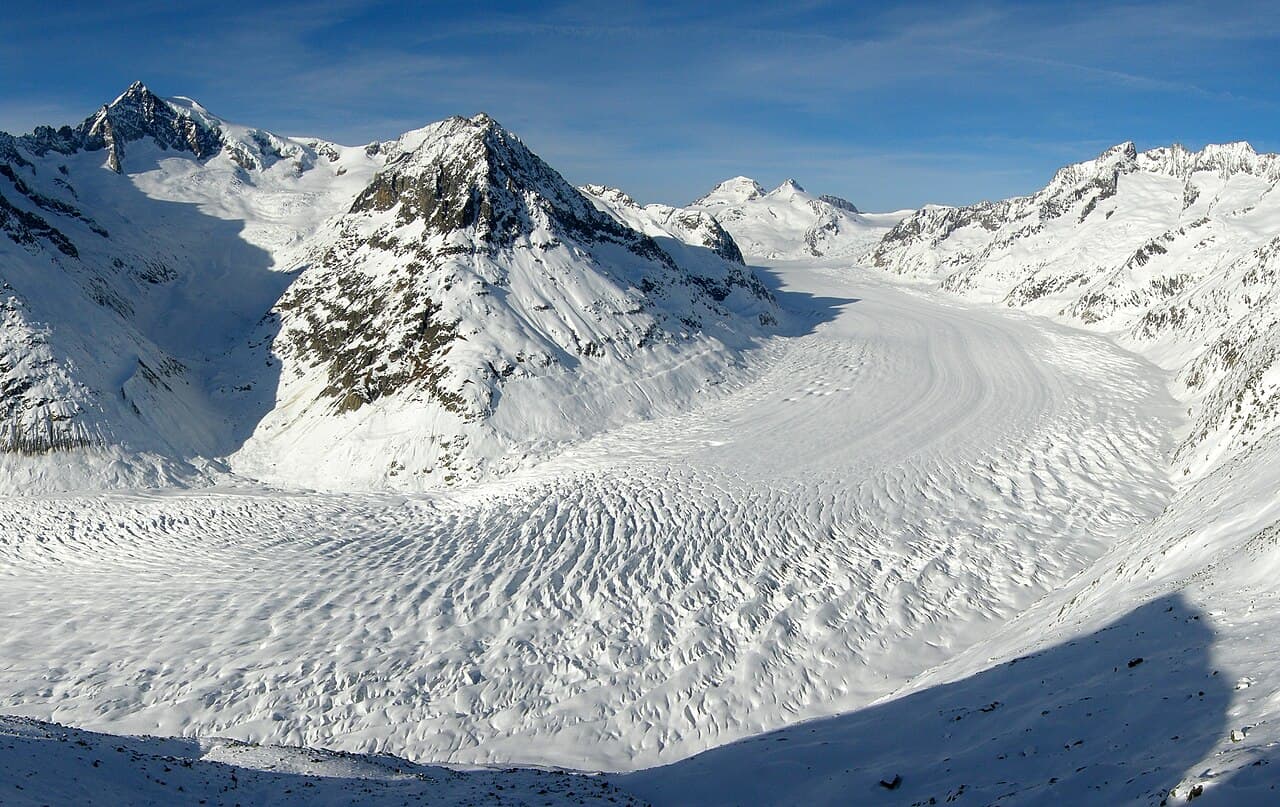
Aletsch is the largest glacier in the Alps, about 20 km long, and part of a UNESCO World Heritage site. The best views are from the Bettmerhorn and Eggishorn cable cars. The best season is June to September.
🚂 Jungfraujoch
Jungfraujoch, known as the "Top of Europe", sits at roughly 3,454 m. A cogwheel train climbs through a tunnel from Kleine Scheidegg. The ticket is expensive and highly weather-dependent, so check the webcams first.
Dress warmly at altitude and bring sunglasses — the sun is especially strong on snow.
🇫🇷 Mer de Glace, Chamonix
France's largest glacier lies in the Mont Blanc massif. A small train from Chamonix takes you up to Montenvers, where the glacier opens up below. It has shrunk sharply in recent decades, a clear example of climate change.
🇮🇸 Vatnajökull and the ice caves
Iceland's Vatnajökull is Europe's largest ice cap. Blue ice cave tours mostly run from November to March and are only safe with a guide. To plan an Iceland trip, see Tbilisi → Reykjavik: A Guide to Iceland's Capital.
⚠️ Safety
- Walk on a glacier only with a guide and proper equipment
- Stay on marked paths — crevasses are often hidden under snow
- Mountain weather changes fast, so dress in layers
- Check cable car timetables and the last ascent
🗺️ Planning and routes
Swiss glaciers are easy to reach from Lucerne — see Tbilisi → Lucerne: Swiss City Guide 2026. For similar nature routes, read Fjords in Europe: Norway's Best Routes and Travel Tips, Alpine Hiking Trails in Europe: A Beginner's Guide and Cable Cars and Funiculars of Europe: A Guide.
✈️ Flights
Plan your flight to Zurich or Reykjavik with the Travel365 flight search and the price calendar.
Tags